
Yes, you may be able to file a claim after a jet ski accident in Georgia if another person, rental company, property owner, or other party caused or contributed to your injuries. Malchow Johnson Injury Lawyers helps injured people understand how Georgia personal injury rules apply when a fun day on the water turns into a serious accident. A claim may seek compensation for medical bills, lost income, pain, future care, and other losses tied to the crash. The strength of the claim often depends on evidence, fault, insurance coverage, and whether the accident was properly reported.






Jet ski crashes can happen on lakes, rivers, marinas, rental areas, and busy recreational waterways near Augusta and across Georgia. Malchow Johnson Injury Lawyers approach these cases by looking closely at what happened before the impact, who had control of the watercraft, and whether unsafe conduct violated boating rules or basic safety standards.
Can You File a Jet Ski Accident Claim in Georgia? 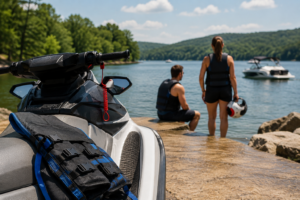
You can generally file a Georgia jet ski accident claim when your injuries were caused by someone else’s negligence. A jet ski, also called a personal watercraft, is treated differently from a car in some ways, but the basic personal injury question is familiar: did someone fail to use reasonable care, and did that failure cause harm?
A claim may be possible if the accident involved:
- A reckless jet ski operator
- A boat operator who failed to keep a proper lookout
- A rental company that provided unsafe equipment
- An intoxicated operator
- A rider who followed too closely or crossed another vessel’s path
- A marina, dock, or property hazard
- A defective watercraft or missing safety equipment
- A parent, owner, or other person who allowed unsafe use
Many people assume boating and jet ski accidents are treated as “assumed risk” events because riding on the water carries some danger. That is not always true. Enjoying a watercraft does not mean you accept someone else’s careless behavior. If another party’s actions caused preventable injuries, a civil claim may be available.
Attorney - Partner Attorney - Partner Associate Attorney Associate Attorney
Leland Malchow

Chris Johnson

Dane Anderson

Bailey Marshall
Common Jet Ski Accident Scenarios in Georgia
Georgia waterways can become crowded during warmer months, especially around holiday weekends, fishing areas, public ramps, lake homes, and rental locations. Jet skis are fast, responsive, and smaller than many boats, which can make them harder to see in congested areas.
Common scenarios include:
- A rider speeding too close to another vessel
- A jet ski striking a dock, buoy, shoreline, swimmer, or anchored boat
- A passenger falling because the operator made an unsafe turn
- A rental customer receiving little or no safety instruction
- A boat operator creating a wake that causes a personal watercraft crash
- A collision involving two jet skis
- A rider operating under the influence of alcohol or drugs
- A mechanical failure that should have been found during maintenance
For example, a visitor may rent a jet ski near a busy marina and receive only a brief explanation before entering the water. If the rental company failed to explain safe operation or gave the rider a poorly maintained watercraft, liability may extend beyond the rider alone.
How Georgia Law May Affect a Jet Ski Accident Claim
Georgia boating rules apply to personal watercraft, and those rules can matter in an injury claim. Evidence that a person violated a safety rule may help show negligence, although every case depends on the facts.
Georgia prohibits boating under the influence. That rule can apply to operators of boats and personal watercraft. If the operator was impaired, speeding, weaving through traffic, or ignoring posted restrictions, that conduct can become a major liability issue.
Georgia also has rules about reporting certain boating accidents. If someone is injured, killed, disappears, or there is significant property damage, the accident may need to be reported to the proper authority. A report can preserve key facts, identify witnesses, and document conditions close to the time of the crash. Readers who need more information about reporting should review the firm’s guide on filing a boating accident report at https://nmjfirm.com/filing-a-boating-accident-report/.
Time limits also matter. In many Georgia personal injury cases, the statute of limitations is two years from the date of injury. Some facts can affect deadlines, especially if a government entity, minor, fatal injury, or unusual legal issue is involved. Do not wait until the deadline is close. Evidence on the water can disappear quickly.
They made everything easy for me! Even when I lost faith in the car accident where a drunk driver hit me, they helped me through every process. They were quick as they could be and made everything easier for me while being in the process of my move to Japan for the Navy, full time student, and planning my own wedding. I appreciated the help. Thank you!” - Julissa Evans I had the pleasure of allowing Mr. Leland Malchow to represent my case and I would recommend 10star rating if possible. Not only was Mr. Leland very professional and knowledgeable, he also took the time to listen to my frustrations about my situation. He offered a listening ear, as well as some kind motivational advice. Our relationship has been through business only but I would extend a hand to him and the law firm from here on out. Thank you all and God Bless." - Chris Rowland Chris Johnson is an exceptional attorney for car wreck cases. His expertise, clear communication, thorough preparation, and effective negotiation skills led to a favorable outcome. With compassion and support, he guided me through the process, making him highly recommended for anyone in need of a skilled legal advocate." - Jayko Robinett
Who May Be Liable After a Jet Ski Crash?
Liability depends on control, ownership, conduct, equipment, and the location of the accident. More than one party may share responsibility.
A jet ski operator may be liable if they were speeding, distracted, impaired, following too closely, ignoring right-of-way rules, or operating without proper care for nearby boats and swimmers.
A boat operator may be liable if their wake, failure to yield, or unsafe maneuver caused the jet ski crash. Boat operators have a duty to watch for smaller watercraft and operate safely around crowded areas.
A rental company may be liable if it failed to maintain the watercraft, ignored known mechanical problems, rented to an unqualified operator, failed to provide required safety equipment, or gave inadequate safety instructions.
A property owner or marina may be liable if a dangerous dock, hidden hazard, poor lighting, or unsafe traffic pattern contributed to the accident.
A manufacturer or maintenance provider may be liable if a defective part, faulty repair, steering problem, throttle issue, or safety failure caused the crash.
For a deeper look at how responsibility is evaluated, see the firm’s resource on boat accident injury liability at https://nmjfirm.com/boat-accident-injury-liability/.
What Compensation Can a Jet Ski Accident Claim Include?
A jet ski accident can cause injuries that affect work, mobility, sleep, and daily routines. Compensation depends on the severity of the injuries, medical treatment, long-term outlook, available insurance, and proof of fault.
A claim may include damages for:
- Emergency care and hospital bills
- Surgery, follow-up visits, and rehabilitation
- Prescription medication and medical devices
- Lost wages
- Reduced earning ability
- Pain and suffering
- Emotional distress
- Scarring or disfigurement
- Future medical care
- Property damage
- Wrongful death damages when a loved one is lost
Common injuries include broken bones, head injuries, spinal injuries, soft tissue damage, lacerations, shoulder injuries, knee injuries, near-drowning trauma, and internal injuries. Even a crash that seems minor at first can cause delayed symptoms. Medical care creates a record that connects the injury to the accident and helps prevent insurers from claiming the condition came from something else.
Choosing a Personal Injury Attorney How Much Is My Personal Injury Claim Worth?Related Videos
What Should You Do After a Jet Ski Accident?
Your first priority is safety and medical care. Move away from traffic on the water if you can do so safely. Call for emergency help when anyone is injured, missing, or in danger.
After the immediate danger passes, take steps that may protect your claim:
- Get medical treatment as soon as possible
- Report the accident when required
- Take photos of the jet ski, boat, dock, injuries, and location
- Save rental agreements, receipts, waivers, and text messages
- Get names and contact information for witnesses
- Write down the weather, water conditions, and what you remember
- Avoid giving recorded statements before getting legal advice
- Keep all medical bills, discharge papers, and work notes
- Do not post about the accident on social media
If you are unsure what to gather, the firm’s evidence guide for watercraft accidents at https://nmjfirm.com/boat-accident/how-to-gather-evidence-after-a-boat-accident-in-south-carolina-for-a-stronger-case/ offers practical ideas that may also help Georgia injury victims think through documentation.
What If You Were Partly at Fault?
A jet ski accident can involve disputed faults. The other operator may claim you were going too fast. A rental company may claim you ignored instructions. An insurer may argue that you assumed the risk by riding.
Georgia uses a modified comparative fault system in many injury cases. That means your compensation may be reduced if you are partly responsible, and you may be barred from recovery if your share of fault reaches the legal threshold. Because fault disputes can change the value of a claim, it is important to preserve evidence before memories fade and equipment is repaired or returned.
Proof may come from witness statements, photos, video, rental records, damage patterns, emergency reports, medical records, GPS data, maintenance records, and expert analysis. The goal is to build a clear timeline of what happened and why.
How Insurance Issues Can Complicate Jet Ski Claims
Jet ski accident claims often involve different types of coverage. Unlike a typical car crash, there may not be a simple auto policy to review. Possible sources can include boat insurance, homeowner’s insurance, rental company coverage, marina coverage, umbrella policies, commercial policies, or product liability coverage.
Insurance companies may deny coverage by arguing that an exclusion applies, the operator was not authorized, the vehicle was rented, the injured person signed a waiver, or the accident happened outside the policy’s scope. A waiver does not always end the claim. The language, facts, and Georgia law all matter.
This is one reason watercraft claims can take careful investigation. For more general insight into how injury claims progress, see the firm’s guide on a boat accident case timeline at https://nmjfirm.com/boat-accident-case-timeline/.
How an Attorney Can Help After a Georgia Jet Ski Accident
A lawyer can help identify responsible parties, gather records, communicate with insurers, and value the full impact of the injury. That work can be especially helpful when several people were involved, the watercraft was rented, the accident happened far from home, or the insurance company disputes fault.
An attorney may help by:
- Investigating how the accident happened
- Preserving watercraft, rental, and maintenance evidence
- Obtaining reports, photos, and witness statements
- Reviewing available insurance coverage
- Working with medical providers to understand future care needs
- Calculating wage loss and long-term damages
- Negotiating with insurers
- Filing a lawsuit if settlement discussions do not resolve the claim
Georgia personal injury claims require proof. A strong claim shows not only that the crash happened, but why it happened, who caused it, and how the injury changed the person’s life. The firm’s resource on how to prove negligence in a Georgia personal injury case at https://nmjfirm.com/personal-injury/how-to-prove-negligence-in-a-georgia-personal-injury-case/ explains this core issue in more detail.
Frequently Asked Questions About Jet Ski Accident Claims
Do I need a lawyer for every jet ski accident?
Not every minor incident requires legal representation. You should consider speaking with an attorney if you needed medical treatment, missed work, have lasting symptoms, were blamed for the crash, were hurt on a rental jet ski, or are dealing with an insurance denial.
Can I file a claim if I was a passenger?
Yes, a passenger may have a claim if the operator, another boater, a rental company, or another party caused the accident. Passengers often have less control over the situation, which makes the investigation especially important.
What if the crash happened during a vacation?
You may still have a Georgia claim if the accident happened in Georgia, even if you live somewhere else. Keep travel records, medical records, rental documents, and photos. Follow-up care in your home state can also become part of the damages record.
What if the jet ski was rented?
Rental cases can involve waivers, equipment inspections, training, age rules, warnings, and maintenance logs. The rental agreement should be reviewed before assuming you have no claim.
Speak With a Georgia Jet Ski Accident Attorney
A jet ski accident can leave you with medical bills, time away from work, unanswered questions, and pressure from insurance companies. You do not have to sort through those issues alone.
Malchow Johnson Injury Lawyers helps injured people in Augusta, Georgia, South Carolina, and surrounding communities understand their options after serious personal injury accidents. To discuss a jet ski or boating injury claim, contact the firm for a free consultation through https://nmjfirm.com/personal-injury-lawyers-in-augusta-ga/.
This article is for informational purposes only and is not legal advice. Consult an attorney about your specific situation.


 |

 |