Richmond County elementary students return to class on August 5, 2026. K-8, middle, high, and magnet school students return on August 6, 2026. The first weeks of school can change traffic patterns around Augusta as buses return to their routes, families adjust to new drop-off lines, students walk or ride bicycles, and young drivers travel to school.
You can reduce risk by checking your child’s bell schedule, reviewing the route to school, allowing more travel time, following posted school-zone speeds, and knowing when Georgia law requires traffic to stop for a school bus. If a crash occurs, focus first on medical care, report the accident, preserve photographs and witness information, and avoid guessing about fault.
A Late Arrival Is Safer Than a Rushed Turn, Sudden Lane Change, or Illegal Pass.






Why Back-to-School Traffic Can Create Added Risks 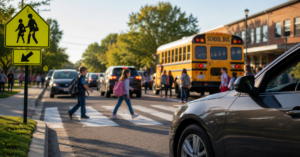
Morning and afternoon school traffic places many road users in the same area within a short period. A driver may encounter children crossing streets, buses making frequent stops, parents entering or leaving school property, cyclists near the shoulder, and teen drivers with limited experience.
Common back-to-school traffic risks include:
- Drivers who are distracted by phones, navigation systems, food, or activity inside the vehicle
- Vehicles stopping suddenly near crosswalks, bus stops, and school entrances
- Parents making unsafe U-turns or double-parking during drop-off
- Children entering the roadway between parked vehicles
- Drivers passing a stopped school bus
- Congestion that blocks sight lines near school entrances
- Rain, glare, darkness, or fog that reduces visibility
- Teen drivers who are rushing, distracted, or carrying passengers
- Drivers who are unfamiliar with a new route or bell schedule
Plan for slower traffic during the first several days of school. A route that took 15 minutes during summer may require more time once buses and school traffic return.
Georgia School Bus Stop Rules Every Driver Should Know
Georgia drivers must stop when a school bus displays its red flashing lights and stop arm, subject to the roadway design.
The Georgia Department of Driver Services explains the rule this way:
- On a two-lane road, traffic in both directions must stop.
- On a two-lane road with a center turn lane, traffic in both directions must stop.
- On a four-lane road without a median separation, traffic in both directions must stop.
- On a divided highway with four or more lanes and a median separation, only traffic traveling in the same direction as the bus must stop.
A painted center line or center turn lane is not a median. Drivers approaching from the opposite direction must still stop when there is no physical median separation.
Remain stopped until the bus begins moving or the red visual signals are no longer operating. Even when you are traveling on the opposite side of a divided highway and the law does not require you to stop, stay alert for children near the roadway.
Attorney - Partner Attorney - Partner Associate Attorney Associate Attorney
Leland Malchow
Chris Johnson
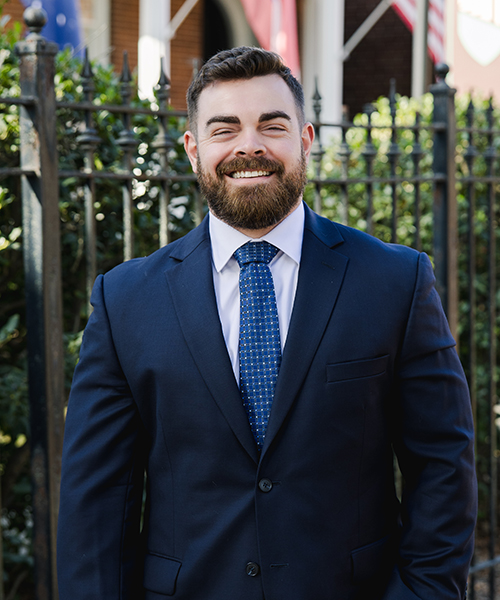
Dane Anderson

Bailey Marshall
School-Zone and Crosswalk Safety in Augusta
Posted school-zone limits and flashing beacons are designed to give drivers more time to see and respond to children, crossing guards, buses, and vehicles entering school property. Reduce speed before you reach the school zone rather than braking after you enter it.
Georgia law also requires drivers to stop and remain stopped for pedestrians in a crosswalk when the pedestrian is on the driver’s half of the roadway or is approaching closely enough to be in danger. A driver should not pass another vehicle that has stopped at a crosswalk because the stopped vehicle may be shielding a child from view.
When approaching a school, crosswalk, bus stop, or residential intersection:
- Put your phone away before the vehicle starts moving.
- Scan sidewalks, shoulders, medians, and spaces between parked vehicles.
- Leave more following distance behind buses and cars in a drop-off line.
- Expect a child to move unexpectedly.
- Obey crossing guards and school traffic officers.
- Avoid blocking a crosswalk or intersection.
- Check mirrors and blind spots before turning.
- Stop before the sidewalk when leaving a driveway or parking area.
- Use extra care during rain, dawn, and afternoon glare.
Safety Steps for Parents Before School Starts
A brief safety review can help your child know what to do before the first day.
Review the Route
Walk or drive the route with your child. Identify crosswalks, traffic signals, bus stops, driveways, construction areas, and locations where parked vehicles may block visibility.
They made everything easy for me! Even when I lost faith in the car accident where a drunk driver hit me, they helped me through every process. They were quick as they could be and made everything easier for me while being in the process of my move to Japan for the Navy, full time student, and planning my own wedding. I appreciated the help. Thank you!” - Julissa Evans I had the pleasure of allowing Mr. Leland Malchow to represent my case and I would recommend 10star rating if possible. Not only was Mr. Leland very professional and knowledgeable, he also took the time to listen to my frustrations about my situation. He offered a listening ear, as well as some kind motivational advice. Our relationship has been through business only but I would extend a hand to him and the law firm from here on out. Thank you all and God Bless." - Chris Rowland Chris Johnson is an exceptional attorney for car wreck cases. His expertise, clear communication, thorough preparation, and effective negotiation skills led to a favorable outcome. With compassion and support, he guided me through the process, making him highly recommended for anyone in need of a skilled legal advocate." - Jayko Robinett
Confirm Transportation Details
Check the school-specific bell schedule, confirm bus registration, and verify the assigned stop and pickup time. Richmond County families should keep contact information current so the school system can share transportation and schedule updates.
Choose a Safe Drop-Off Point
Use the school’s designated drop-off area. Let your child exit on the curb side. Do not stop in a travel lane, block a bus zone, or ask a child to cross between vehicles.
Set Rules for Walking and Bicycling
Teach your child to stop at the curb, look left, right, and left again, make eye contact with drivers, and cross only when it is safe. Children riding bicycles should use a properly fitted helmet and follow traffic controls.
Prepare Teen Drivers
Set clear rules about phones, passengers, seat belts, speed, and departure time. Remind your teen that missing a turn or arriving late is safer than making a sudden maneuver.
What to Do After a School-Zone Traffic Accident
The steps you take after a crash can protect your child’s health and preserve useful evidence.
- Call 911 and Address Immediate Safety
Request police and emergency medical help when anyone may be injured. Follow the dispatcher’s instructions. Do not move a seriously injured person unless traffic, fire, or another immediate danger makes movement necessary.
Choosing a Personal Injury Attorney How Much Is My Personal Injury Claim Worth?Related Videos
- Seek Medical Evaluation
Children may have trouble describing pain, dizziness, confusion, numbness, or vision changes. Some concussion, neck, back, and soft-tissue symptoms may become more noticeable after the initial shock fades. Tell medical providers about every symptom and follow the treatment plan.
- Photograph the Scene
When you can do so safely, photograph or record:
- Vehicle positions and damage
- License plates and identifying information
- Crosswalks, lane markings, signs, signals, and school-zone beacons
- The school entrance, bus stop, or drop-off area
- Skid marks, debris, and roadway conditions
- Weather, lighting, and sight obstructions
- Visible injuries and damaged property
- Nearby businesses, homes, buses, or vehicles that may have cameras
- Collect Witness Information
Ask witnesses for their names, telephone numbers, and email addresses. A crossing guard, school employee, parent, bus passenger, or nearby driver may have seen events that were not captured in the police report.
- Identify the Bus or Transportation Provider
When a school bus or private transportation vehicle is involved, record the bus number, route number, license plate, operator name, and any company markings. The identity of the vehicle owner and operator may affect insurance coverage, claim procedures, and deadlines.
- Preserve Records
Keep copies of the police report, medical records, bills, receipts, school communications, photographs, videos, insurance letters, and notes about missed work or activities. Save damaged clothing, helmets, backpacks, and child safety seats until you receive guidance about inspection or replacement.
- Use Care With Insurance Communications
Provide basic notice to your own insurer when required, but avoid speculation about speed, distance, visibility, or fault. Do not sign a broad medical authorization, release, or settlement before you understand what it covers. Parents should also avoid posting accident details or injury updates on social media.
For more guidance after an Augusta car accident, visit:
https://nmjfirm.com/car-accident/steps-to-take-after-a-car-accident-in-augusta/
Who May Be Responsible for a Back-to-School Accident
Responsibility depends on the facts, the people and vehicles involved, and the cause of the crash. A claim may require investigation of:
- A driver who was speeding, distracted, impaired, or failed to yield
- A motorist who passed a stopped school bus
- A bus driver or transportation company
- The owner of a vehicle driven by another person
- A rideshare, delivery, or commercial vehicle operator
- A maintenance provider or vehicle manufacturer when a defect contributed
- Another person or organization whose conduct created the hazard
A collision involving a public school bus or government-operated vehicle may raise different notice, immunity, insurance, and filing questions from a crash involving two private vehicles. Those issues should be reviewed promptly because the ordinary personal injury deadline may not be the only deadline that applies.
Evidence That May Matter in a Child Injury Claim
Strong evidence explains how the accident occurred and how the injury affected your child. Useful records may include:
- Police and incident reports
- School bus video or stop-arm camera footage
- School security or nearby business video
- Traffic camera or dash camera recordings
- Witness statements
- Vehicle event data and phone records
- Medical records and diagnostic testing
- Therapy, rehabilitation, and follow-up records
- School attendance, accommodation, and activity records
- Photographs showing healing or physical limitations
- Receipts and records of accident-related expenses
Video can be overwritten, vehicles can be repaired, and witnesses can become difficult to locate. Early preservation requests can help protect evidence before it disappears.
Parents can learn more about pedestrian accident representation at:
https://nmjfirm.com/augusta-pedestrian-accident-attorneys/
Information about bus accident representation is available at:
https://nmjfirm.com/augusta-bus-accident-lawyers/
Frequently Asked Questions
What if my child seems fine after the crash?
Continue to watch for headaches, vomiting, unusual sleepiness, confusion, balance problems, neck or back pain, personality changes, or trouble concentrating. Seek prompt medical care when symptoms appear or when you have concerns. Call 911 for emergency symptoms.
What if the driver who caused the accident leaves the scene?
Call 911, write down every detail you remember, and ask witnesses whether they recorded a license plate or vehicle description. Photograph debris and damage. Nearby cameras and vehicle parts may help identify the driver.
What if a school bus was involved?
Record the bus number, route, driver information, transportation provider, and school district contact information. Ask how to obtain the incident report. Because public and private bus claims may follow different procedures, obtain legal advice promptly.
Should I give the other driver’s insurer a recorded statement?
You should be cautious. A recorded statement may include questions about fault, symptoms, medical history, or your child’s activities. Speak with an attorney before agreeing to a broad recorded interview or signing a release.
Speak With an Augusta Traffic Accident Lawyer
A school-zone, pedestrian, bus, bicycle, or teen driver accident can leave your family managing medical appointments, school absences, insurance calls, and uncertainty about what comes next. Malchow Johnson Injury Lawyers represents injured people in Augusta, Georgia, nearby communities, and other areas across Georgia and South Carolina.
The firm has served injured clients since 1985 and keeps its practice focused on personal attention. An attorney can investigate the collision, request available video, identify insurance coverage, communicate with adjusters, organize medical evidence, and review the deadlines that apply.
Learn about Augusta car accident representation:
https://nmjfirm.com/augusta-car-accident-lawyers/
Contact Malchow Johnson Injury Lawyers:
https://nmjfirm.com/contact-us/
Call: 706-705-7511
Consultations are available at no charge.
This article is for informational purposes only. It is not legal advice, does not create an attorney-client relationship, and should not replace advice about a specific accident.


 |
 |