
Traffic fatalities across Beaufort County and the greater CSRA continue to highlight specific roadways where serious crashes occur at disproportionate rates. U.S. 21, U.S. 278, and Fording Island Road consistently appear in fatal and high-injury crash reports, particularly involving pedestrians, bicyclists, and motorcyclists. This article explains why these corridors are so dangerous, how crashes commonly occur, and what injured victims need to know about pursuing compensation under Georgia and South Carolina law.
Why Certain Roads See More Serious Crashes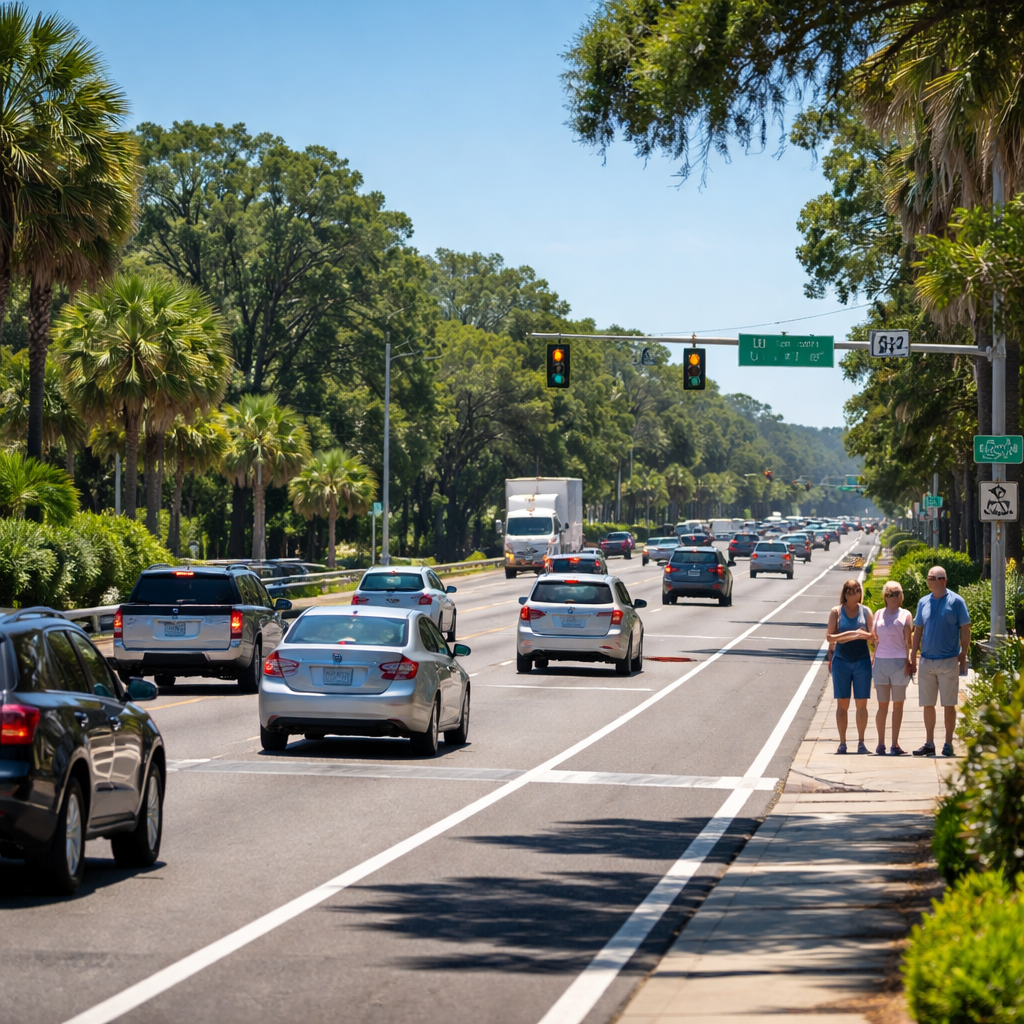
Not all roads carry the same risk. High-speed corridors, tourist traffic, mixed pedestrian use, and poor visibility create conditions where severe injuries are more likely when collisions occur. In coastal South Carolina and eastern Georgia, several routes stand out year after year due to traffic volume and design limitations.
Beaufort County alone recorded 20 traffic-related deaths in 2025, including pedestrians, bicyclists, and motorcyclists. Nearly one-third of those fatal crashes occurred on U.S. 21, with additional clusters along U.S. 278 (Fording Island Road) and S.C. 170 (Okatie Highway). Similar roadway risk patterns exist in the Augusta area along heavily traveled U.S. routes and connector roads.
Understanding why these crashes happen matters for both prevention and legal accountability.
U.S. 21: A Persistent Fatality Corridor in Northern Beaufort County
U.S. 21 runs through northern Beaufort County, connecting rural communities, military traffic, and commuter routes. While it serves as a vital artery, several factors increase crash severity:
-
Higher speed limits combined with local access points
-
Limited lighting in rural stretches
-
Pedestrian crossings without adequate protection
-
Driver fatigue and distracted driving
Fatal crashes along U.S. 21 frequently involve head-on collisions, pedestrians struck while crossing or walking roadside, and nighttime accidents where visibility plays a major role.
When collisions occur on this roadway, injuries are often catastrophic due to vehicle speed and delayed emergency response times in less densely populated areas.
U.S. 278 and Fording Island Road: Bluffton and Hilton Head Hotspots
U.S. 278, particularly Fording Island Road, serves as a primary gateway into Bluffton and Hilton Head Island. It carries:
-
Daily commuter traffic
-
Tourist traffic unfamiliar with the area
-
Commercial vehicles
-
Cyclists and pedestrians accessing retail and residential zones
Crash patterns along U.S. 278 commonly include:
-
Rear-end collisions during congestion
-
Left-turn crashes at busy intersections
-
Pedestrian and bicycle impacts near shopping corridors
-
Multi-vehicle pileups during peak travel seasons
North-end Hilton Head Island continues to report serious injury crashes tied to congestion, lane changes, and driver confusion at intersections.
S.C. 170 (Okatie Highway) and Regional Connectors
S.C. 170 connects Beaufort, Bluffton, and Jasper County, serving both local drivers and freight traffic. Its wide lanes and higher speeds can give drivers a false sense of safety while increasing impact force during collisions.
Common crash causes include:
-
Unsafe lane changes
-
Speeding
-
Failure to yield at intersections
Serious injury claims arising from these crashes often involve spinal trauma, traumatic brain injuries, and long-term disability.
Pedestrians, Cyclists, and Motorcyclists Face the Greatest Risk
In 2025, six pedestrians, two bicyclists, and two motorcyclists were killed in Beaufort County crashes. These road users have little protection when struck, and liability often turns on driver behavior rather than road conditions alone.
High-risk scenarios include:
-
Pedestrians crossing multilane roads without signals
-
Cyclists traveling alongside fast-moving traffic
-
Motorcyclists impacted by drivers failing to check blind spots
Georgia and South Carolina laws provide strong legal protections for vulnerable road users, particularly when motorists violate right-of-way rules or drive distracted.
How Road Design and Driver Behavior Intersect
While infrastructure plays a role, most severe crashes involve a combination of roadway design and driver negligence. Common contributing factors include:
-
Speeding through mixed-use corridors
-
Distracted driving
-
Impaired driving
-
Failure to yield
-
Poor lighting or signage
Identifying fault requires a detailed investigation that goes beyond the police report.
Legal Options After a Serious Crash on These Roads
Victims injured on U.S. 21, U.S. 278, Fording Island Road, or similar corridors may be entitled to compensation for:
-
Medical expenses
-
Lost income
-
Long-term care
-
Pain and suffering
-
Permanent disability
Wrongful death claims may also be available when crashes result in fatalities.
Liability may extend beyond the at-fault driver to include employers, commercial vehicle operators, or other responsible parties depending on the circumstances.
What an Attorney Investigates After a High-Risk Roadway Crash
Serious crash cases require immediate evidence preservation and analysis, including:
-
Crash scene reconstruction
-
Vehicle data downloads
-
Surveillance and traffic camera footage
-
Witness interviews
-
Roadway design evaluation
-
Prior crash history at the location
Early legal involvement helps prevent evidence loss and protects victims from insurance tactics.
Georgia and South Carolina Time Limits Matter
Both states impose strict deadlines for filing injury and wrongful death claims:
-
Georgia generally allows two years from the date of injury
-
South Carolina typically allows three years
Missed deadlines can permanently bar recovery, regardless of fault.
Speak With a Trusted Georgia or South Carolina Attorney Today
If you were injured on U.S. 21, U.S. 278, Fording Island Road, or another dangerous roadway in Georgia or South Carolina, reach out today. Malchow Johnson Injury Lawyers provides experienced, compassionate, and results-driven representation across both states. Contact us now to schedule a confidential consultation and learn how we can protect your rights and recovery.


 |

 |