
Multi-vehicle accidents create some of the most complex injury claims in Georgia and South Carolina, often involving three or more drivers, multiple insurance carriers, and conflicting accounts of fault. Chain-reaction crashes on highways like I-20, I-26, and I-95 frequently result in serious injuries due to the force of repeated impacts. Georgia and South Carolina laws allow injured victims to pursue compensation even when fault is divided among several parties. Understanding how liability is assigned is critical to protecting your recovery.
What Is Considered a Multi-Vehicle Accident?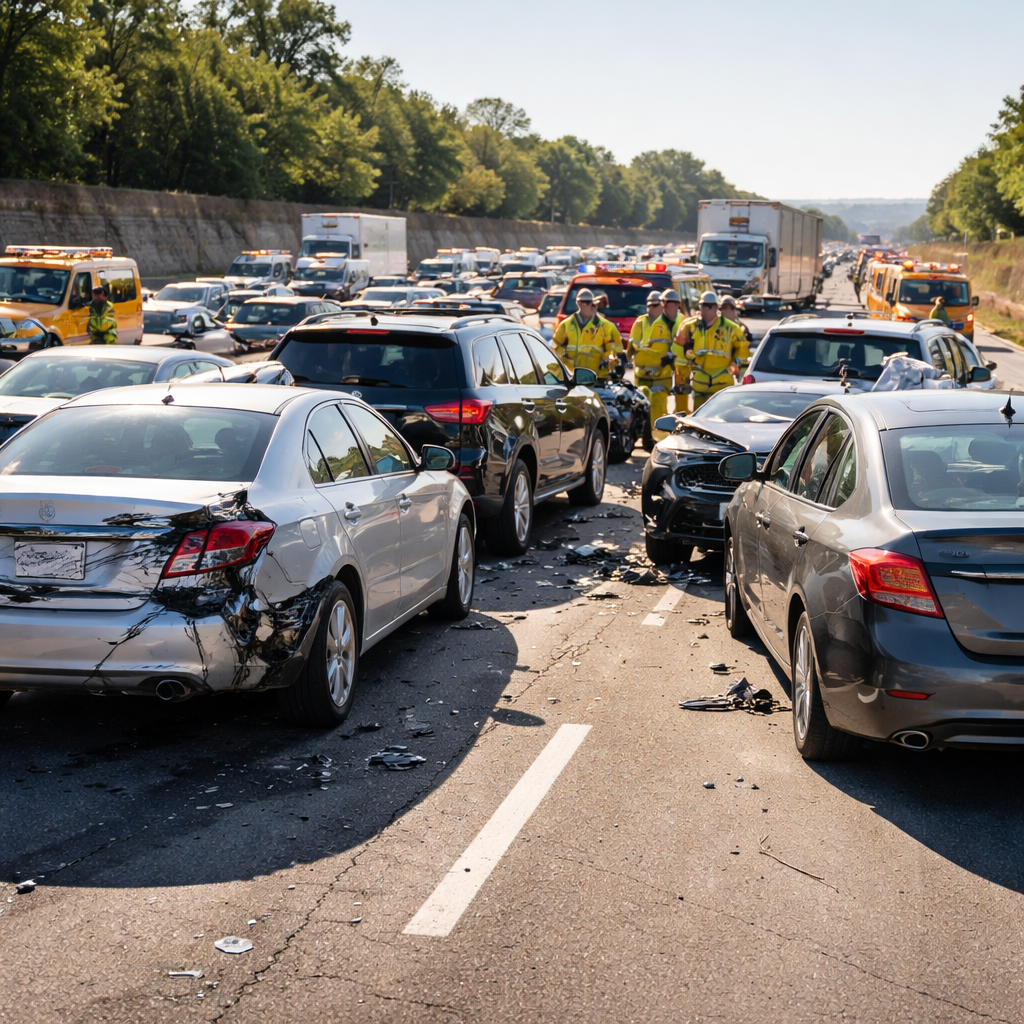
A multi-vehicle accident, often called a pileup or chain-reaction crash, occurs when three or more vehicles collide in a single incident. These accidents are common on high-speed roadways, during heavy traffic, or when weather conditions reduce visibility.
Common examples include:
-
Rear-end chain reactions in stop-and-go traffic
-
Highway pileups caused by sudden braking
-
Multi-lane crashes during rain, fog, or construction zones
-
Secondary collisions after an initial impact
Because several drivers may contribute to the crash, determining responsibility is rarely straightforward.
Why Multi-Vehicle Accident Claims Are More Complicated
Unlike a two-car crash, multi-vehicle collisions raise several legal challenges:
-
Conflicting statements from multiple drivers
-
Disputes between insurance companies trying to limit payouts
-
Shared or partial fault among drivers
-
Severe injuries caused by repeated impacts
-
Commercial vehicles or government entities involved
Insurance companies often attempt to delay or deny claims by shifting blame to other drivers in the pileup. Without a clear understanding of how liability works, injured victims risk being undercompensated.
How Fault Is Determined in Multi-Vehicle Accidents
Police Reports and Scene Evidence
Investigators rely on:
-
Crash reports
-
Vehicle damage patterns
-
Skid marks and debris fields
-
Traffic camera footage
-
Witness statements
In pileups, fault may be assigned to more than one driver, especially when multiple unsafe actions contributed to the collision.
Georgia’s Modified Comparative Fault Rule
Georgia follows a modified comparative negligence system. An injured person can recover compensation if they are less than 50 percent at fault.
Key points:
-
Compensation is reduced by the victim’s percentage of fault
-
Recovery is barred if the victim is 50 percent or more responsible
Example:
If a victim is found 20 percent at fault and awarded $100,000, they may recover $80,000.
South Carolina’s Comparative Negligence Rule
South Carolina also uses modified comparative negligence, but recovery is allowed as long as the injured person is 51 percent or less at fault.
This distinction can affect claims involving drivers from multiple states or accidents near state borders.
Who Can Be Held Liable in a Multi-Vehicle Crash?
Negligent Drivers
Any driver whose actions contributed to the crash may share responsibility, including those who:
-
Followed too closely
-
Drove distracted or impaired
-
Sped or failed to adjust for weather
-
Made unsafe lane changes
Commercial Truck Drivers and Employers
When a tractor-trailer or delivery vehicle is involved, liability may extend beyond the driver to:
-
The trucking company
-
Maintenance providers
-
Cargo loaders
Federal and state regulations often apply, increasing the complexity of these claims.
Government Entities
Poor road design, missing signage, or unsafe construction zones can contribute to pileups. Claims against government agencies require strict notice deadlines and special procedures.
Vehicle Manufacturers
In rare cases, defective brakes, tires, or safety systems may contribute to a chain-reaction crash, opening the door to a product liability claim.
Common Injuries in Multi-Vehicle Accidents
Because victims may be struck multiple times, injuries are often severe and long-lasting:
-
Traumatic brain injuries
-
Spinal cord damage
-
Broken bones and crush injuries
-
Internal organ damage
-
Permanent mobility loss
Medical care may involve surgery, rehabilitation, and long-term treatment, making full compensation essential.
What Compensation May Be Available
Injured victims in Georgia and South Carolina may pursue compensation for:
-
Medical expenses and future care
-
Lost wages and reduced earning capacity
-
Pain and suffering
-
Permanent disability or disfigurement
-
Property damage
In fatal crashes, surviving family members may pursue wrongful death damages.
Why Insurance Companies Push Back in Pileup Claims
Insurance carriers often argue:
-
Their driver was hit first and not responsible
-
Another driver caused the chain reaction
-
The injured person contributed to the crash
With multiple policies involved, insurers frequently attempt to minimize payouts by prolonging investigations and shifting blame.
How Legal Representation Helps in Multi-Vehicle Accident Claims
An experienced attorney can:
-
Conduct an independent investigation
-
Preserve critical evidence before it disappears
-
Coordinate claims across multiple insurers
-
Work with accident reconstruction experts
-
Protect victims from unfair fault assignments
This is especially important in high-stakes pileup cases where injuries and damages are substantial.
Time Limits for Filing a Claim
-
Georgia: Personal injury claims must generally be filed within two years of the accident date.
-
South Carolina: Most injury claims must be filed within three years.
Claims involving government entities may require much shorter notice periods.
Speak With a Trusted Georgia or South Carolina Attorney Today
If you were injured in a multi-vehicle accident in Georgia or South Carolina, reach out today. Malchow Johnson Injury Lawyers provides experienced, compassionate, and results-driven representation across both states. Contact us now to schedule a confidential consultation and learn how we can protect your rights and recovery.


 |

 |