Motorcycle accidents can be catastrophic, leading to severe injuries and life-altering consequences. In the aftermath of an accident, proving liability is a crucial step in ensuring you receive the compensation you deserve for medical bills, lost wages, and emotional distress. If you have been involved in a motorcycle accident, understanding how to prove liability is essential for securing a fair settlement or judgment. This article will guide you through the steps involved in proving liability, the importance of gathering evidence, and how a skilled motorcycle accident lawyer can help you navigate the complexities of the legal system.






Understanding Negligence and Duty of Care 
In any personal injury case, including motorcycle accidents, the concept of negligence is foundational to proving liability. Negligence occurs when one party fails to exercise reasonable care, resulting in harm to another party. To prove negligence in a motorcycle accident case, you must establish four key elements.
The first element is duty of care, which means that the responsible party had an obligation to drive safely and follow traffic laws to avoid putting others at risk. All drivers on the road, including motorcyclists, have a duty to follow these laws and drive with caution.
The second element is breach of duty. This occurs when the responsible party violates their duty of care by engaging in dangerous driving behaviors such as speeding, running red lights, or driving while under the influence of alcohol or drugs. In a motorcycle accident case, proving that the other driver breached their duty of care is essential for establishing liability.
The third element is causation. This shows that the breach of duty directly caused the accident and your injuries. For example, if a driver runs a red light and collides with your motorcycle, causing you to crash and sustain injuries, the breach of duty (running the red light) directly led to the accident and your harm.
The final element is damages. This refers to the harm you suffered as a result of the accident, which may include physical injuries, medical expenses, lost wages, and emotional distress. Without damages, you cannot pursue a personal injury claim.
Attorney - Partner Attorney - Partner Associate Attorney Associate Attorney
Leland Malchow

Chris Johnson
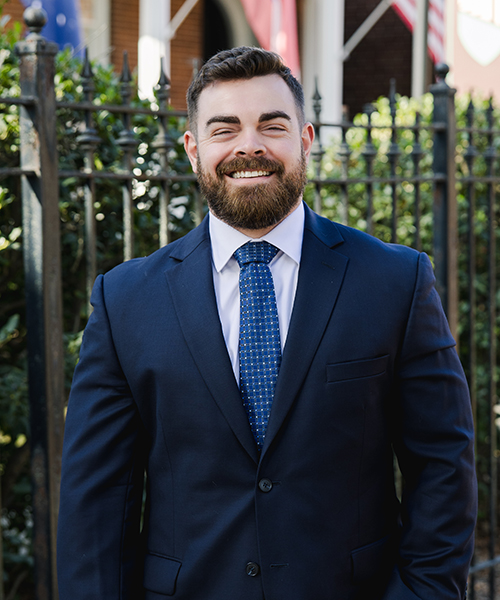
Dane Anderson

Bailey Marshall
Proving negligence by establishing these four elements allows you to show that the other party is liable for the accident and your injuries.
Gathering Evidence to Strengthen Your Case
In motorcycle accident cases, gathering strong evidence is essential to proving liability. The more evidence you have, the stronger your case will be. Important types of evidence include police reports, witness testimony, photographs, and medical records.
A police report is often a critical piece of evidence. When an accident occurs, the police are usually called to the scene to investigate. The report will contain details about the accident, such as the time, location, and any citations issued to the other driver. If the officer determines that the other driver was at fault, this will be an important piece of evidence in your case.
Witness testimony can also be crucial in proving liability. If there were any bystanders or passengers who saw the accident occur, their statements can provide additional support for your claim. Witnesses can help confirm that the other driver was driving recklessly or engaging in unsafe behavior.
They made everything easy for me! Even when I lost faith in the car accident where a drunk driver hit me, they helped me through every process. They were quick as they could be and made everything easier for me while being in the process of my move to Japan for the Navy, full time student, and planning my own wedding. I appreciated the help. Thank you!” - Julissa Evans I had the pleasure of allowing Mr. Leland Malchow to represent my case and I would recommend 10star rating if possible. Not only was Mr. Leland very professional and knowledgeable, he also took the time to listen to my frustrations about my situation. He offered a listening ear, as well as some kind motivational advice. Our relationship has been through business only but I would extend a hand to him and the law firm from here on out. Thank you all and God Bless." - Chris Rowland Chris Johnson is an exceptional attorney for car wreck cases. His expertise, clear communication, thorough preparation, and effective negotiation skills led to a favorable outcome. With compassion and support, he guided me through the process, making him highly recommended for anyone in need of a skilled legal advocate." - Jayko Robinett
Photographs of the accident scene, vehicle damage, and your injuries can provide visual evidence that strengthens your case. If there is video footage of the accident, such as from a traffic camera or a nearby business’s surveillance system, this can also be valuable in proving fault.
Medical records will show the extent of your injuries and the treatment you have received. These records help demonstrate the physical harm you have suffered as a result of the accident, and they are necessary for calculating the damages you are entitled to.
Lastly, in some cases, expert testimony may be needed to clarify complex details of the accident, such as accident reconstruction. An accident reconstructionist can analyze the scene, vehicle damage, and other evidence to provide an expert opinion on how the accident occurred and who was responsible.
Having comprehensive evidence is key to proving liability and ensuring a successful outcome in your case.
Proving Direct Causation
Once negligence is established, the next step is to prove causation. This means showing that the defendant’s actions directly caused the accident and your injuries. Causation is often one of the more challenging aspects of a motorcycle accident case, as there may be questions about what exactly caused the accident and whether your injuries were the result of the accident or another factor.
Choosing a Personal Injury Attorney How Much Is My Personal Injury Claim Worth?Related Videos
Medical evidence is crucial for proving causation. Your healthcare provider’s records can help demonstrate that your injuries were a direct result of the accident. These records may include diagnostic tests, surgeries, treatments, and rehabilitation efforts. They will show that the injuries you sustained were not pre-existing conditions but were caused by the crash.
In some cases, an accident reconstruction expert may be needed to explain the mechanics of the accident. These experts use scientific principles to reconstruct the events leading to the crash, providing evidence that links the defendant’s actions to your injuries. If the other driver was speeding or failed to yield the right of way, an expert may be able to provide testimony to prove how those actions directly caused the accident.
Understanding Comparative Negligence
In some motorcycle accident cases, both parties may share some degree of fault. This is where the concept of comparative negligence comes into play. Comparative negligence is the legal principle that allows both parties to share responsibility for the accident and its consequences. For example, if you were speeding at the time of the accident but the other driver was also at fault for running a red light, both parties may be considered partially responsible.
In jurisdictions that follow comparative negligence laws, the court will assign a percentage of fault to each party. If you are found to be partially at fault, your compensation may be reduced based on your percentage of responsibility. For example, if you are determined to be 20% at fault for the accident, your settlement may be reduced by 20%.
Understanding how comparative negligence works in your jurisdiction is critical, as it can impact the amount of compensation you are entitled to receive. A skilled motorcycle accident lawyer will help you understand how comparative negligence laws apply to your case and ensure that you receive fair compensation.
The Importance of a Motorcycle Accident Lawyer
Proving liability in a motorcycle accident case can be complex, and having the right legal representation is crucial. A skilled motorcycle accident lawyer can guide you through the legal process, gather evidence, negotiate with insurance companies, and represent you in court if necessary.
An experienced lawyer will thoroughly investigate the accident, including interviewing witnesses, reviewing the police report, and working with experts to gather evidence. They will also assist in calculating the full extent of your damages, including medical bills, lost wages, and pain and suffering.
Insurance companies are often more focused on protecting their bottom line than ensuring that you are fully compensated for your injuries. A lawyer can negotiate with the insurance company to ensure that you receive a fair settlement and that your rights are protected.
If your case goes to trial, your lawyer will represent you in court, presenting the evidence and making a compelling case to the judge or jury. A lawyer’s expertise can make a significant difference in the outcome of your case, increasing your chances of proving liability and securing the compensation you deserve.
Proving liability in a motorcycle accident case is a multifaceted process that requires establishing negligence, gathering strong evidence, proving causation, and understanding comparative negligence. It can be a complicated and challenging process, but with the right legal assistance, you can ensure that your rights are protected and that you receive fair compensation for your injuries.
If you have been involved in a motorcycle accident, contact Malchow Johnson Injury Lawyers for a free consultation. Our experienced team is here to help you navigate the legal system and fight for the compensation you deserve.
To learn more about this subject click here: Can a Motorcycle Accident Change Who You Are? Understanding Personality Changes After a Crash


 |

 |