Leaving the Scene of a Car Accident in GA and SC
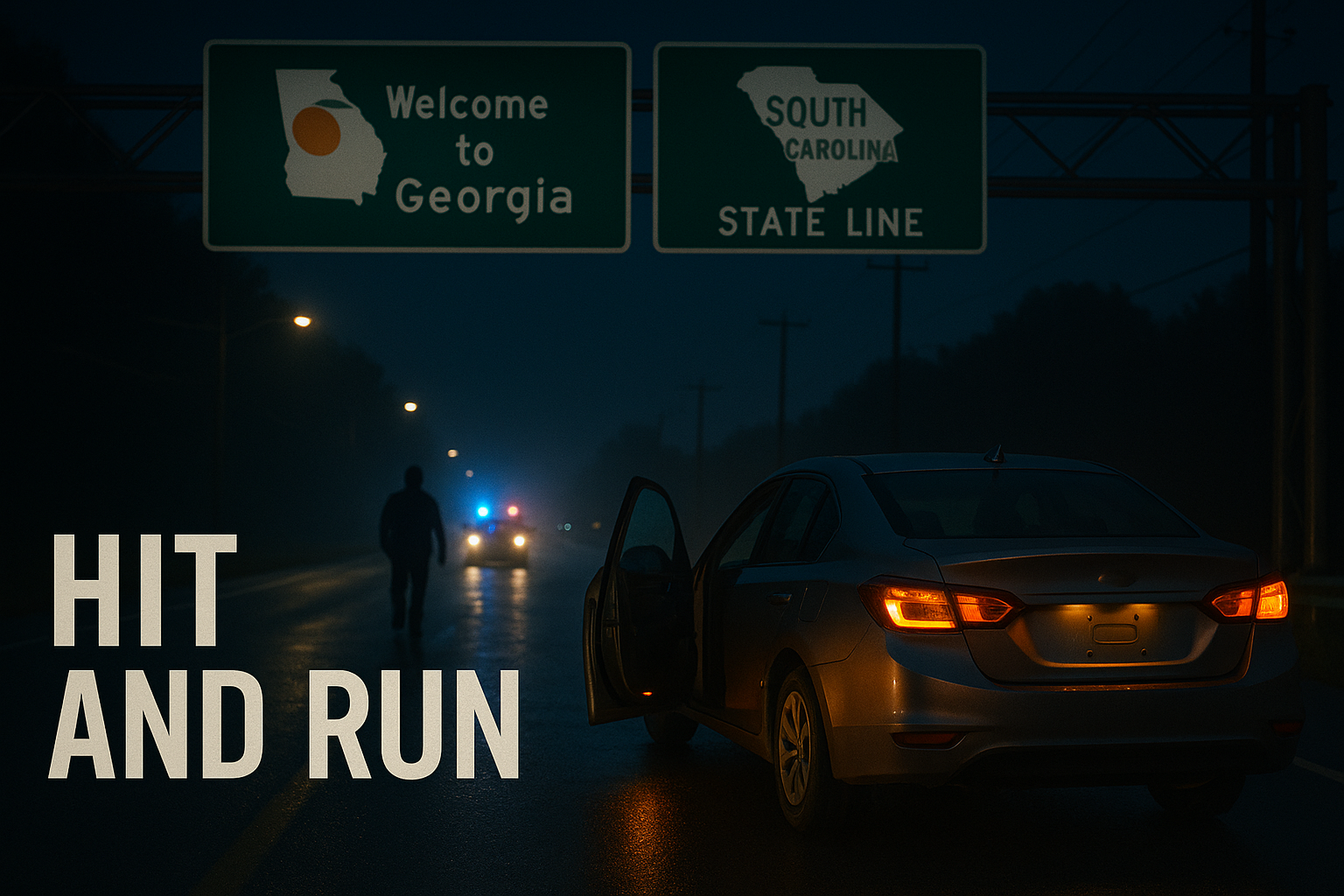
Quick answers: Both Georgia and South Carolina require you to stop immediately after any crash that causes injury, death, or property damage. You must share your information, help anyone who is hurt, and call the police. Leaving can trigger criminal charges that range from a misdemeanor to a felony. Even if you already left, there are steps you can take today to reduce harm and protect your rights.
What to do right now if a crash just happened
-
Move to a safe spot if you can, then stop and stay at the scene.
-
Call 911 and ask for police and medical help.
-
Exchange your name, address, registration, and insurance information. Show your driver’s license on request.
-
Give reasonable aid to anyone injured until responders arrive.
-
Photograph vehicles, plates, the crash scene, and injuries. Collect witness names and numbers.
-
Avoid arguments and avoid guessing about fault.
-
If the other driver fled, write down everything you remember and ask nearby businesses for camera footage.
What “leaving the scene” really means in GA and SC
In both states, leaving the scene means failing to stop and remain long enough to identify yourself, share required information, and give reasonable aid. Georgia’s rule applies whether people are hurt or there is only vehicle damage. South Carolina has duties for injury or death, attended-vehicle damage, and unattended vehicles. If there is contact or damage, the safest rule is simple: stop, report, help, and identify yourself.
For parked or unattended vehicles, both states require you to stop, try to locate the owner, and if you cannot, leave a readable note with your name and address in a conspicuous place. You should also follow the state’s crash reporting thresholds.



Duties at the scene in Georgia
-
Stop immediately at or return to the scene.
-
Provide your name, address, and vehicle registration number. Show your license upon request.
-
Give reasonable aid, which can include arranging or providing transportation to medical care.
-
If an injured person is unconscious or cannot communicate, make every reasonable effort to get emergency services and notify law enforcement.
-
If you strike a parked or unattended vehicle, stop, leave accurate identifying information, and report the crash when required by law.
Duties at the scene in South Carolina
-
Stop and remain at the scene until you have shared required information and given reasonable help to anyone who is injured.
-
For injury or death, call for aid and cooperate with responders.
-
For attended-vehicle property damage, stop and exchange identifying information.
-
For unattended vehicles, stop, make a reasonable effort to find the owner, and if you cannot, leave a readable note with accurate contact details.
Penalties at a glance
Georgia
-
If a crash causes death or serious injury and a driver leaves, the offense can be charged as a felony with potential prison time.
-
If there is injury that does not qualify as serious injury or attended-vehicle property damage, leaving is typically a misdemeanor, with fines and possible jail up to 12 months. Repeat offenses can increase fines.
-
Striking an unattended vehicle and leaving is a misdemeanor. Penalties depend on the facts and record.
-
These criminal penalties are separate from civil liability for medical bills, lost wages, vehicle damage, and pain and suffering.
South Carolina
-
For injury or death, leaving the scene can be charged as a felony with penalties that increase with severity. A fatal crash can bring a prison sentence measured in years.
-
For attended-vehicle property damage, leaving is typically a misdemeanor with fines and possible jail time.
-
For striking an unattended vehicle and leaving, the law sets misdemeanor penalties.
-
Criminal penalties are separate from civil financial responsibility.






License and insurance consequences
Georgia license impact: A hit-and-run conviction is a suspendable offense. The Department of Driver Services can suspend your driving privileges after the court reports a qualifying conviction. A limited permit may be possible in some scenarios, but eligibility depends on your exact offense and your prior record.
Insurance: Expect your insurer to reevaluate risk after a conviction or at-fault crash. If the at-fault driver fled and is unknown, your uninsured motorist coverage can step in. UM or UIM may cover medical bills, lost income, and other losses when the at-fault driver cannot be identified or is uninsured. For deeper context from our site, see:
If you already left the scene and want to make it right
Leaving can turn a small mistake into a large legal problem. Act now and avoid compounding the situation.
-
Park safely and take a breath. Do not keep driving around the area.
-
Call an attorney before you contact police or any insurer, then self-report.
-
Share facts only: your location, your vehicle, and where the crash happened. Do not guess about injuries or fault.
-
Save dash cam clips, photos, and any notes you made. Do not edit or delete anything.
-
Do not contact the other party directly on social media.
Prompt reporting shows good faith and can reduce exposure. An attorney can coordinate your statement, which lowers the risk of saying something inaccurate that makes matters worse.
Common mistakes to avoid after any crash
-
Chasing a fleeing driver. This increases risk and can create new liability. Report details to police instead.
-
Leaving a note that is incomplete or hard to read. Include full name, address, and a current phone number that works.
-
Talking yourself into fault at the scene. Give facts, not opinions.
-
Delaying medical care. Gaps in treatment hurt both your health and your claim.
-
Posting about the crash online. Insurers review public posts.
When the other driver fled: how your claim still moves forward
Your case can still succeed when the at-fault driver runs. Here is how we typically build these claims.
-
Police report and canvassing. We request nearby camera footage, contact witnesses, and check businesses along likely routes.
-
Vehicle forensics. Paint transfer, lens fragments, and damage patterns can identify a make and model.
-
Insurance pathways. We pursue your UM coverage and evaluate whether any third party shares fault, such as an employer in a work-related trip. In limited circumstances a bar that overserved a driver may be investigated to see if state law supports a claim.
-
Medical proof. We document injuries with clear timelines and support damages with records and expert opinions.
If a driver is identified later, we pursue a conventional liability claim against that driver and their insurer.
Legal references at a glance
Georgia: Duties and penalties for leaving the scene appear in O.C.G.A. § 40-6-270. Duties after striking an unattended vehicle appear in § 40-6-271. Reporting duties appear in § 40-6-273. License suspension authority appears in § 40-5-54.
South Carolina: Duties after injury or death appear in S.C. Code § 56-5-1210. Duties for attended-vehicle damage appear in § 56-5-1220. Duties for unattended vehicles appear in § 56-5-1240.
Call us last, once you have the facts you need
Talk with a Georgia and South Carolina car accident lawyer today. Call or use the contact form to schedule a consultation. Our offices serve Augusta, GA; Aiken, North Augusta, and Beaufort, SC; and nearby areas.